Author: J. Kevin King

Apple V FBI: A Battle Based in 1789

Apple PrivacyWith more than half of the US population using an Apple iPhone, the news of the battle about to play out between the mega tech company and the FBI is front and center.

The big question on everyone’s mind: can the government require Apple to decrypt the data of a terrorist suspect? The forthcoming battle and the answer to that question all circles back to the All Writs Act of 1789.

Listen in as Kevin King discusses the legal basis for the FBI’s request and how this battle is bringing privacy concerns to the forefront of public attention.

Want to hear more talks from Peter and Kevin King? Tune into WCIS 1010 AM Columbus, IN the first and third Friday of every month for People’s Law Talk.

The Numbers Are Shocking

StatisticsFor more than 90 years the National Safety Council has published Injury Facts, a reference source for safety statistics. The 2015 version has just been released and the some of the safety statistics are alarming.

If one desires to understand how well the United States is doing in safety, the Injury Facts provide a shocking insight regarding statistical data of injuries, death, and economic impact upon our society. To show you just how serious and far-spread the impact can be, we’ve pulled some statistics from Injury Reports 2015 to share.

Unintentional injury related deaths in 2013, including all accidental injures and positioning, were approximately 130,800. It excludes homicides, suicides, and war deaths. Unintentional injury related deaths are the number one cause of death for the age group of 1-44.

Breaking that number down, there were approximately 35,500 motor vehicle injury related deaths, 66,000 home injury related deaths, and 3,738 work injury related deaths, with agriculture (i.e. farming, forestry, fishing, and hunting)being the highest occupation for unintentional injury related deaths.

There were approximately 39,600,000 non-fatal medically consulted injuries. This translates into about 1 out of 8 Americans seeking medical attention for injuries. There were approximately 4.3 million automobile related injuries, 20 million home related injuries, and 4.8 million work related injuries.

From an economic standpoint, the impact of fatal and non-fatal unintentional injuries amounted to almost $821 billion in 2013, equivalent to approximately $6,700 per household. These are the costs that every household pays directly through higher prices for goods, services, or taxes.

Besides the $821 billion in economic losses, the lost quality of life is estimated at an additional $4,254 billion, making the comprehensive costs approximately $5,074 billion in 2013. To provide you with a yardstick for comparison, the Department of Defense budget for fiscal year 2013 was $525.4 billion. Unintentional injuries cost almost 10 times that in 2013!

We have a long way to go toward a safer society. Remember, it is cheaper to put the fence at the top of the cliff than pay for the ambulance below. True safety begins with recognition of hazards and risks in the design of products, procedures, and environments to eliminate the hazards to the extent reasonably possible for a safer society.
Why the Law Dogs?

Tegan and KylieA question we’ve come across now and again when we have new visitors to our office is “why are your dogs here?” The curiosity doesn’t surprise us as it’s not commonplace to find canines in a professional office setting.

Academic, poet, and writer Joseph Duemer once wrote, “There are some simple truths…and the dogs know what they are.” Dogs remind us of the important rules in life. They provide a positive atmosphere while undertaking intense legal work on behalf of people.

Plato (347 B.C. – 427 B.C.) supported the idea of a dog in every courtroom because he believed they could tell when someone was lying. Perhaps he was correct.

The Cline, King, & King (CKK) Law Dogs have been known to help our clients through difficult and stressful moments. They are vigilant, loyal, hardworking retrievers who come to the office every day. The Law Dogs are owned by employees of CKK.

Perhaps CKK was ahead of the curve in allowing dogs to come to the office daily. There is a nationwide movement for dogs to be included in trial proceedings to assist witnesses overcome the stress of the Courtroom. (Read more about this subject here.)

Get to know all of the Law Dogs from CKK, now in their third generation.

The Future Came Too Soon

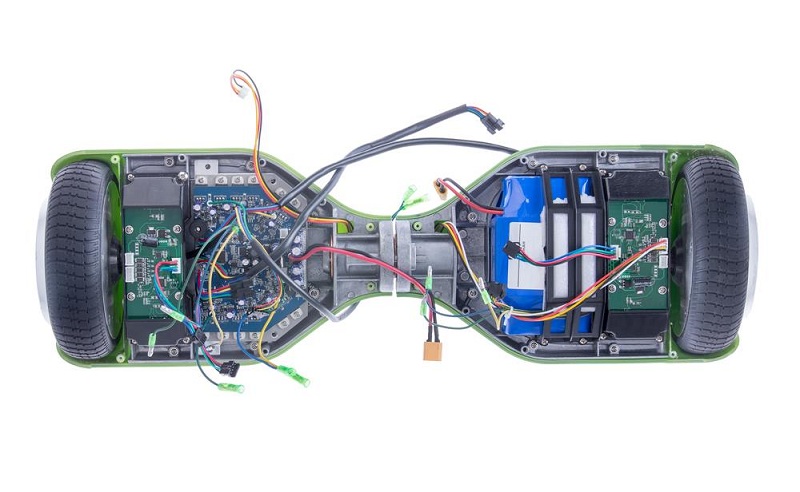
HoverboardDoc Brown and Marty McFly had to travel all the way to the future to find a hoverboard. Now we’re living in that future, only the future may have come too soon. Thousands of hoverboards are being sold without proper hazard analysis and now consumers are being put in grave danger.

On December 16, 2015, the Consumer Product Safety Commission issued a statement directing its agency staff to “work non-stop to find the root cause…” of fire hazards associated with hoverboards.

However, fire is not the only hazard relative to hoverboards. In the statement released by the CPSC, it also recognized that it has received dozens of reports of injuries from emergency rooms of hospitals relating to hoverboards.

Unbeknownst to consumers, risk of serious injury is associated with hoverboards. By comparison, approximately 120,500 people are treated annually in emergency rooms for skateboard injuries. Half of the injured are between the ages of 15-24. More than 34 percent are 14 and younger. Head injuries, fractures, internal organ injuries are some of the serious injuries.

Consumers are not aware of the ‘gravity of risk’ associated with hoverboard use. Consumers might believe that these incidents “only happen to someone else” or “I will be careful” in using a product. However, such wishful thinking is unacceptable regarding product design.

The most effective means to avoid incidents is by eliminating or reducing hazards during the design and development of a product before reaching consumers, but, as the saying goes, “it is too late to shut the stable door after the horse has bolted.”

Designers and manufactures of hoverboards should have undertaken hazard analyses to identify unsafe physical conditions and risk analyses to determine the probability of serious injury and/or death. Within risk analyses, there should be further analyses to understand how consumers will use the product.

As the CPSC continues their investigation, they should demand designers and manufacturers provide their hazard and risk analyses regarding hoverboards. This would greatly assist the CPSC in its investigation. Otherwise, tax payers will end up footing the bill to determine root causes of why hoverboards are causing damage to consumers and property.

The future came too soon and now consumers are in harms way. It’s too late to go back, so now it’s time to find the way to a safer future.

All Plugged In: Extension Cord Awareness

Extension Cord AwarenessWith winter and the holiday season upon us, you’re outlets are probably all filled. You may have even moved to using extension cords to power Christmas trees, lights, inflatable decor, and other extras that come with the holidays and cold weather.

Were you aware the Consumer Product Safety Commission (CPSC) estimates about 3,300 residential fires originate in extension cords every year killing approximately 50 persons and injuring 270 others? Further, there are approximately 4,000 injuries per years relative to electrical extension cords treated in hospital emergency rooms. Therefore, the risk (probability of an untoward result occurring) is significant.

Consumer awareness regarding extension cords is a topic for concern. Most consumers are not aware of the hazards (unsafe physical conditions) relative to extension cords. Information regarding extension cords is not easy to understand and disbursed in various resources.

Consumers should only purchase extension cords that have the “UL” marking. This marking indicates that the extension cord manufacturer has complied with UL Standard 817. Unfortunately numerous extension cords are marketed without meeting the voluntary standard. It was not until August 26, 2015 that the CPSC issued a final rule maintaining extension cords would be deemed a substantial product hazard under the act unless the cords contained certain observable characteristics.

On top of ensuring the cord you purchased is UL compliant:

  1. Only use indoor extension cords for indoor needs. Select a low gage extension cord made designated for specifically for outdoor use if you are using it in outdoor conditions.
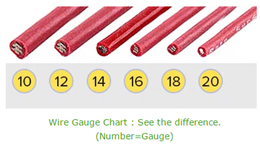
    One of the confusing aspects in the selection of an outdoor extension cord is the gage wire rating (wire diameter). It is opposite to what one would think. The smaller the number (i.e. 10, 12,) the thicker the wire. The thicker wire provides less resistance, therefore minimizing overheating.
    Extension Cord Gage Chart
  2. Do not use extension cords for heat producing appliances such as coffee pots, toasters, and space heaters. The electrical load from these devices often approaches the circuit capacity and adding cord length increases the chance of overheating.
  3. Do not concentrate or trap the heat of an extension cord. Coiling an extension cord can concentrate heat. The same is true for placing extension cords under a rug or carpeting. The trapped heat can damage the cord and lead to a fire.
  4. Only use the necessary length of extension cord for the application. For example, if your Christmas tree lights need a 6-foot cord, do not use a 12-foot cord.

A consumer product that is used every day by millions of Americans has diffuse and confusing information for which it is difficult for consumers to understand. This is another example of why safety engineering must be incorporated into products during the design and manufacture so hazards can be identified and eliminated to the extent reasonably possible. Otherwise, consumers are left on their own to search for piecemeal information about a product.

For more information about household extension cords causing fires, follow this link to a safety alert from the CPSC.

Pay Attention, If You Can

man on phone drivingHow many tasks are you performing right now? You probably have your phone in your hand checking email or waiting on a text. Maybe your television is on in the background waiting for the news report to begin. Then of course, you’re trying to read this blog. All the while your brain is trying, but failing, to multitask.

Stop. Put down the phone. Turn off the television. Close those other windows on your desktop. Give us five minutes of your undivided attention. You’ll see in a minute why it’s so important.

Understanding attention limits of humans is an important factor in the design of products and systems. Persons do not perform well when trying to perform two attention demanding tasks at the same time.

For example, during two cognitively complex tasks, such as driving and talking on the phone, the brain shifts its focus and people develop “inattention blindness.” Inattention blindness is a tendency to look at but not see objects. It is estimated that drivers using cell phones, including through hands free means, look but fail to see up to 50 percent of information in their driving environment.

According to the National Safety Council, the brain engages in a constant process to deal with information it receives by selecting the information the brain will attend to, processing the information, encoding the information (a stage that creates memory,) storing the information, retrieving the stored information, and then executing upon the information. When the brain is overloaded all of these steps are affected. However, people do not realize this challenge is occurring within their brains.

When persons maintain they can multitask, they do not understand how the brain processes information for decision-making. Human brains do not perform two tasks at the same time. Instead, the brain handles tasks sequentially switching between one task and another. When brains juggle tasks rapidly, it leads to the erroneous conclusion that people are able to do two tasks at the same time. In reality, the brain is switching attention between the tasks performing only one task at a time.

Designers of products and systems need to understand limitations of humans attention and design systems to eliminate or minimize human error due to humans limitations regarding attention; after all, to err is human, design forgives.

For more information on human attention capabilities we recommend downloading “Understanding the Distracted Brain,” from the National Safety Council.